From the Salon Chair to a Complete Makeover
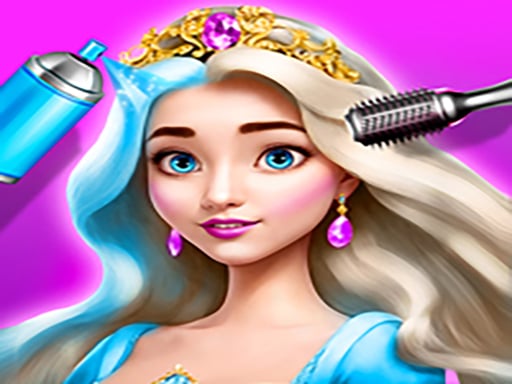
Charming Hair Salon Make Up Game puts the player behind the chair of a busy virtual beauty salon. The job is not limited to choosing one finished hairstyle from a menu. Each client arrives as the beginning of a longer transformation, and the player works through the look in stages.
The hair is the starting point. You prepare it, use salon tools, change its shape, and decide whether the client needs a simple trim, a dramatic curl, a new color, or a more polished style. Once the hairstyle begins to feel complete, the makeover can continue through makeup, clothing, and accessories.
That structure gives the game a different rhythm from a basic dress up game.
In a traditional wardrobe game, the character is often ready for clothing immediately. You click a dress, replace the shoes, change the hairstyle, and compare the result. Charming Hair Salon Make Up Game asks the player to spend more time on the process behind the final appearance.
The salon tools matter because each one represents a different decision. Scissors change the shape of the hair. Curling and styling tools change its texture or direction. Color tools can create a small accent or completely alter the character’s appearance. Makeup and clothing then determine whether the finished client looks casual, formal, playful, glamorous, or deliberately unusual.
The game is therefore less about finding one correct answer and more about completing a sequence of connected design choices.
A hairstyle that looks attractive on its own may not suit the makeup chosen later. A bright hair color may need a quieter outfit. A detailed dress may work better with a simpler hairstyle. The player sees the full result only after several separate decisions have been combined.
Public descriptions of the game consistently present it as a salon simulation in which players serve different clients, work with familiar hairdressing tools, experiment with color and styling, and complete the result with makeup or clothing.
What You Do When the Game Begins
The opening of a salon game matters because it establishes whether the player is simply choosing a picture or actually performing a makeover.
Charming Hair Salon Make Up Game is built around the role of a working stylist. The client is not presented as a finished fashion model. She arrives because something about her current appearance needs attention, and the salon tools give the player a way to change it.
The first task is to understand the client and the tools available around the salon interface.
You may see familiar items such as:
- Hair-washing or preparation tools
- Scissors
- A dryer
- Curling or styling tools
- Hair-color options
- Highlight or decorative choices
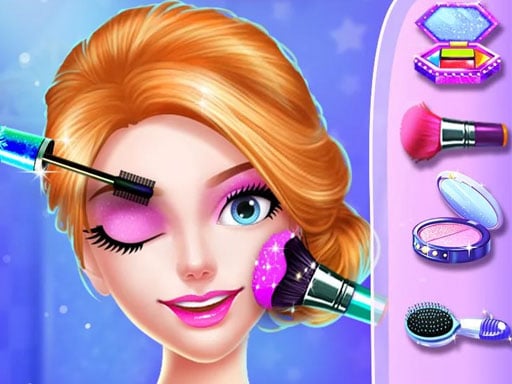
- Makeup tools
- Clothing and accessories
The exact order matters more than it would in a simple dress up game. Hair normally needs to be prepared before the final styling choices make sense. Cutting affects the shape. Curling or straightening affects the texture. Color changes how the style is perceived. The finishing stages bring the face, hair, and clothing together.
This makes the early part of the game feel more like a small salon routine than a random collection of cosmetic buttons.
The player does not need real hairdressing knowledge. Each tool is represented visually, and the controls are designed around clicking, tapping, or swiping. The game communicates most actions through the object being held and the area where it should be used.
That visual approach makes it possible to begin without reading a long tutorial.
The most useful way to approach a new client is to avoid rushing toward the clothing stage. Spend time understanding the hair first. Look at its current length, shape, and color. Decide whether the goal is a clean everyday style or something deliberately dramatic.
A salon makeover usually looks more coherent when the player has a general direction before using every available tool.
For example, a client might be styled around:
- Soft curls and a warm makeup palette
- Shorter hair with a clean, modern outfit
- Bright color with simple clothing
- A formal hairstyle with understated makeup
- A playful style with stronger accessories
The game does not require the player to use a professional fashion term for the idea. It only helps to know what the final character is supposed to feel like.
The Salon Workflow Is the Main Game
The strongest part of Charming Hair Salon Make Up Game is the sense that the player is working through a complete service.
The customer does not simply sit down and instantly receive a finished result. The makeover is divided into decisions, and those decisions build on one another.
A typical salon workflow can be understood in five broad stages:
1. Prepare the Hair
Before thinking about an elaborate style, the hair needs to be ready for the tools that follow.
Preparation establishes a clean starting point. It also helps the game communicate that hairstyling is a process rather than a single button.
This stage may feel simple, but it changes the player’s relationship with the final result. The hairstyle feels created rather than selected.
2. Establish the Shape
Cutting and shaping determine the basic outline.
This is one of the most important decisions because the overall silhouette remains visible even after makeup, accessories, and clothing are added.
A shorter style can make the character feel modern or energetic. Longer hair creates more room for curls, waves, decorative sections, and formal looks.
The player should think about shape before color. A strong color cannot fix a shape that does not suit the intended style.
3. Add Texture
Curling, straightening, drying, or other styling tools change how the hair behaves visually.
Texture can make a hairstyle feel soft, polished, playful, formal, or dramatic.
The same length can appear completely different depending on whether the hair is straight, curled, or given more volume.
4. Choose Color and Highlights
Color is one of the fastest ways to transform the client.
A natural shade may support an elegant makeover. A brighter color can make the hairstyle the main focus of the whole character. Highlights can add contrast without replacing the full base color.
Because color attracts attention immediately, it should be chosen in relation to the clothing and makeup that will follow.
5. Finish the Whole Character
The hairstyle is important, but the makeover does not end at the hair.
Makeup, clothing, and accessories determine whether the result feels complete. They can support the hairstyle or compete with it. A good final look does not require every area to be equally detailed.
The publisher and distributor descriptions emphasize this broader workflow: hair can be washed, cut, curled, colored, and styled, after which the client can be dressed to complete the appearance.
Why the Order of the Tools Matters
It is possible to click through a salon game quickly, but the results become more interesting when the player treats the tools as a sequence.
Consider what happens when color is chosen before the hairstyle has a clear shape.
A bold color may look exciting at first, but the player might later choose a haircut that changes where the color appears. A highlight that worked with long hair may feel too strong on a shorter cut.
The same problem occurs when accessories are chosen too early. An accessory may be attractive by itself but become unnecessary after the player adds curls, volume, or a more detailed outfit.
A more deliberate order creates fewer conflicts:
- Look at the client.
- Decide on the overall mood.
- Prepare the hair.
- Establish length and shape.
- Add texture.
- Choose color or highlights.
- Review the face and makeup.
- Select clothing.
- Add accessories last.
This order is not a rule enforced by the game. It is a useful way to make each step easier to judge.
The hairstyle should carry the strongest visual decision. Makeup should support the face without competing with the hair. Clothing should complete the character rather than introduce an unrelated theme at the end.
Players who prefer experimentation can reverse the process deliberately. Start with an outfit idea, then design a hairstyle around it. Or begin with one strong hair color and keep the remaining choices neutral.
The important point is not that one order is always correct.
The important point is that each tool affects how the next choice will be perceived.
That is what gives the game more depth than a screen full of independent buttons.
Cutting and Shaping the Hair
Cutting is one of the clearest transformations in a salon game because it changes the outline immediately.
When choosing a haircut, think about the relationship between the top, sides, and overall length.
A style with more volume around the top creates a different impression from a style that stays close to the face. Shorter hair can make earrings or makeup more visible. Longer hair can frame the clothing and support formal or fantasy styling.
The player does not need to reproduce a real haircut.
Instead, the goal is to understand what the current shape is doing.
Ask:
- Does the hair hide too much of the face?
- Does the length match the intended outfit?
- Will the style still work after curls are added?
- Is the hair supposed to be the main feature?
- Would a simpler shape leave more room for makeup and accessories?
A useful technique is to make one noticeable change, pause, and review the result before continuing.
Using every cutting or styling option at once makes it difficult to tell which decision improved the client.
The best transformations often come from a few connected changes rather than the maximum number of tools.
A client may need only a cleaner shape and a different color. Another may benefit from a more dramatic change in length and texture.
Because the game includes different clients and preferences, one repeated hairstyle is unlikely to suit every makeover. Distributor descriptions specifically highlight serving a variety of customers with different hair types, preferences, and desired looks.
Curling, Drying, and Creating Texture
Texture determines how the haircut feels after its basic shape has been established.
Straight hair emphasizes clean lines. Curls create movement and volume. Softer waves can sit between those two extremes.
A curling tool should not be treated as an automatic improvement. Adding more texture makes the hairstyle visually busier, which means the outfit or accessories may need to become simpler.
The same logic applies to volume.
A large hairstyle can become the dominant feature of the character. That works well when the rest of the makeover is restrained. It becomes harder to read when the makeup, clothing, jewelry, and hair are all equally decorative.
Drying and preparation tools also help create the impression that the hair is being worked on rather than replaced.
That process is important to the fantasy of running a salon.
The player is not merely browsing a catalogue. The tools create a sense of progression:
- The client arrives.
- The hair is prepared.
- The shape changes.
- The texture develops.
- The final look becomes visible.
This progression gives the game a satisfying before-and-after structure even when there is no competitive score.
Hair Color, Highlights, and Visual Balance
Color can change the meaning of a hairstyle faster than any other salon decision.
A natural color can make a dramatic cut feel more wearable. A vivid color can make a simple shape feel bold. Highlights can create contrast while keeping part of the original appearance.
The game’s distributor descriptions mention multiple hair colors, customizable highlights, and different styling choices as central features of the makeover.
A practical way to use color is to decide which part of the character should attract attention first.
If the hair is the main focus:
- Use a strong color or visible highlight.
- Keep the makeup more controlled.
- Choose clothing that does not repeat too many competing colors.
- Limit large accessories near the face.
If the outfit is the main focus:
- Use a simpler hair color.
- Let the hairstyle frame the clothing.
- Repeat one small clothing color in the makeup or accessory.
- Avoid turning every element into a separate statement.
Highlights are useful when a full color change feels too strong.
They can connect the hair to an outfit without requiring the entire hairstyle to use the same color. They also help the player experiment with contrast while preserving a recognizable base.
One effective challenge is to make two versions of the same client:
- One with a natural color and stronger clothing
- One with a bold color and simpler clothing
Comparing those versions shows how much influence the hair color has over the whole makeover.
Makeup Should Support the Hairstyle
The word “Make Up” appears in the title because the client’s transformation extends beyond the hair.
Makeup can change the balance of the face and affect whether the hairstyle feels casual, formal, soft, dramatic, or playful.
The easiest mistake is to treat the makeup stage as a separate game.
A hairstyle may already have strong color, volume, and detail. Adding equally strong eye makeup, lipstick, and accessories can make the character feel visually crowded.
Instead, look for one connection between the hair and makeup.
That connection might be:
- A similar warm or cool color
- A repeated accent shade
- A formal hairstyle paired with cleaner makeup
- A colorful hairstyle paired with neutral skin and lip tones
- A simple haircut paired with a stronger eye look
The goal is not realism.
The goal is coherence.
A stylized salon game allows exaggerated choices, but exaggerated choices still feel more intentional when they share a visual idea.
Makeup also changes which part of the face receives attention.
Stronger eye makeup draws attention upward and works well with styles that frame the eyes. A stronger lipstick creates a lower focal point and may work better when the hair is kept away from the face.
Small changes in makeup can therefore affect how the haircut itself is perceived.
Clothing Is the Final Salon Decision
The outfit should feel like the final answer to the choices made earlier.
At this stage, the player already knows:
- The client’s hair length
- The hair texture
- The main color
- The makeup intensity
- The overall mood of the makeover
The clothing can either confirm that direction or deliberately change it.
A formal outfit makes curls, polished makeup, and decorative accessories feel connected. Casual clothing can make a bright hairstyle feel playful instead of glamorous. A simpler outfit can prevent a complex hairstyle from becoming overwhelming.
The publisher descriptions note that clients can be dressed after the hairstyle is completed, turning the activity into a full makeover rather than a hair-only game.
A useful final review is to look at the entire character instead of judging each item separately.
Ask:
- Is the hairstyle still the focus?
- Does the outfit introduce a new color that appears nowhere else?
- Are there too many decorative details around the face?
- Would removing one accessory make the look clearer?
- Does the final character match the mood chosen at the beginning?
Removing an item can be as important as adding one.
A complete makeover does not need to use every available option.
How This Differs from a Basic Dress Up Game
A basic dress up game usually begins near the end of the makeover process.
The character is ready, the hair is already styled, and the player chooses clothing and accessories.
Charming Hair Salon Make Up Game begins earlier.
The player is responsible for the steps that create the hairstyle itself. Washing, preparing, cutting, curling, drying, and coloring make the final appearance feel earned rather than selected.
This creates a stronger transformation.
The difference is especially noticeable when comparing the client’s original appearance with the finished result. In a wardrobe-only game, the face and hair may remain unchanged. In a salon game, the entire character can feel different before the outfit is even chosen.
The game also creates more opportunities for cause and effect.
Cutting changes length. Curling changes texture. Color changes emphasis. Makeup changes the face. Clothing changes context.
Because each stage influences the next one, the player is encouraged to think about the character as a complete design.
That is the central appeal of this game.
It is not simply a collection of hair tools, and it is not simply a makeup screen. It connects those activities into one client makeover.
A Game for Process-Oriented Players
Charming Hair Salon Make Up Game is best suited to players who enjoy watching a character change in visible stages.
It may appeal to players who like:
- Hair salon games
- Makeover games
- Cutting and styling tools
- Hair-color experiments
- Before-and-after transformations
- Dress up as a finishing stage
- Working with different clients
- Relaxed mouse or touch controls
It is particularly suitable for someone who wants more direction than a completely open wardrobe game.
The salon process gives the player a natural next step. Finish preparing the hair, then cut. Finish shaping, then color. Finish the hair, then move to makeup and clothing.
This structure provides guidance without creating the pressure of a timer or competitive opponent.
The game may be less suitable for players who want:
- Running or action gameplay
- Difficult puzzles
- Multiplayer competition
- A long narrative
- A large open world
- Confirmed permanent progression
- Highly realistic salon simulation
The tools are designed for accessible casual play, not professional hairdressing accuracy.
That distinction matters.
The game is enjoyable because it creates the feeling of being a stylist, not because it reproduces every technical detail of a real salon.
Controls and Browser Experience
The public game pages describe desktop controls as clicking or swiping, with tapping or swiping used on mobile devices.
On desktop, the mouse is used to:
- Select tools
- Apply or move styling actions
- Choose colors
- Switch options
- Select makeup
- Choose clothing
Some actions may involve a simple click, while others may ask the player to move or swipe the tool across the relevant area.
This is different from a game where every option is applied instantly.
The small movement helps the salon tools feel more interactive.
Mobile compatibility can depend on the provider, browser, and screen size. Touch controls may work, but detailed tools are often easier to use on a larger display.
The game loads through an external provider inside the Girl-Games.io player. That provider may show its own startup screen or advertising before the main game becomes available.
An extra Play button does not mean another program is being installed. It is part of the external game startup process.
Progress saving has not been confirmed. Unless the game clearly shows a Save or Continue option, it is safer to assume that a client makeover may restart when the page is refreshed or closed.
Our Test Notes
Last checked: July 2026 Game provider: GameMonetize Primary controls: Mouse click, tap, or swipe Play style: Multi-step salon makeover Progress saving: Not confirmed
Charming Hair Salon Make Up Game is currently loaded through the standard Girl-Games.io game player rather than through a special page or custom salon component.
The game page uses the same shared iframe, fullscreen, title-bar, and recommendation structure as the other playable titles on the site.
The main experience is designed around a longer makeover sequence rather than one instant clothing selection. The game combines hair work with later beauty and outfit decisions, which makes it a better fit for players who want to complete a process.
The most useful part of the experience is the connection between the tools. A haircut changes which curls will work. Color changes which makeup feels balanced. Clothing changes whether the finished character feels casual or formal.
Progress saving remains unconfirmed. The external provider may also change startup, advertising, or game-file behavior later, so the game source may need to be reviewed again if it stops loading correctly.
Practical Salon Strategies
Decide on the Client’s Direction First
Before using every tool, decide what kind of finished character you want.
You do not need a complicated concept. Choose one simple direction:
- Polished and formal
- Bright and playful
- Soft and casual
- Modern and short
- Long and glamorous
- Colorful and experimental
This helps you reject options that are attractive but unrelated.
Shape Before Color
Choose the main haircut before committing to a strong color.
The amount and placement of visible color depend on the final shape. A highlight may look different after the hair becomes shorter or more curled.
Use Texture Deliberately
Do not add curls only because the curling tool is available.
Ask whether the outfit and makeup need more movement or less visual detail. Straight styles can make colorful clothing easier to read. Curls can add interest when the rest of the makeover is simpler.
Repeat One Color, Not Every Color
A small repeated color can connect the character.
The hair highlight might relate to the lipstick, clothing, or accessory. The colors do not need to match exactly, but a repeated family of tones can make the makeover feel intentional.
Keep One Area Quiet
If the hair is dramatic, keep the outfit or makeup quieter.
If the clothing is highly decorative, use a cleaner hairstyle.
A complete look usually needs one main focus and several supporting choices.
Review before Adding Accessories
Accessories should complete the character, not rescue a design that already feels disconnected.
Pause after the clothing stage. If the character already looks complete, one small accessory may be enough.
Try Opposite Versions
Replay the same client with a different plan.
Make one version natural and another colorful. Make one formal and another casual. Keep the same hair shape but change the makeup and outfit.
This makes it easier to understand which stage has the greatest effect.
Frequently Asked Questions
Is Charming Hair Salon Make Up Game free to play?
The game can be opened and played through the browser without purchasing it from Girl-Games.io. The external provider may display advertising or its own startup screen.
Do I need to download the game?
No separate application is required for the browser version. The game files load through the external provider inside the page.
What can I do in the game?
The game focuses on running a virtual salon for different clients. Activities described by its distributors include preparing and washing hair, cutting, curling, styling, changing colors or highlights, applying makeup, and choosing clothing.
What are the controls?
Desktop versions are described as using clicks or swipes. Mobile versions are described as using taps or swipes. The exact interaction depends on the tool currently selected.
Does the game save progress?
Progress saving has not been confirmed. Check the in-game menu for a Save or Continue option before assuming that a makeover will remain after the browser page is closed.
Can I play on a phone or tablet?
Public distributor pages describe support for desktop and mobile controls, but actual compatibility may vary by device, browser, provider, and screen size. Detailed salon tools are often easier to use on a larger screen.
Why does another Play button appear?
The playable files come from an external provider. That provider may require an additional click before activating sound, advertising, or the main game content.
Is this only a haircut game?
No. Hair styling is the central activity, but distributor descriptions also mention makeup, clothing, and accessories as part of completing each client’s appearance.
Is there a timer or competitive score?
The core experience is presented as a casual salon and makeover activity. It is designed around completing client transformations rather than racing another player.
This salon combines hair treatment and cosmetics, so browse Makeup Games for more beauty-focused play.
More Games You May Like
For another full salon routine with hair, makeup, nails, and clothing, try Hair Salon Dress Up Girl Game. It is a natural next choice when you want several beauty stages in one session.
Funny Hair Salon keeps the focus on hair treatment and salon care, while Princess Hair Makeup Salon Game moves the experience into a princess-themed beauty setting.
If you want a more specific haircut challenge, Princess Anna Short Hair Studio focuses more closely on changing and styling shorter hair.
You can also browse the full Haircut Games collection or see the New Girl Games page.