Start with the Client, Not the Makeup Palette
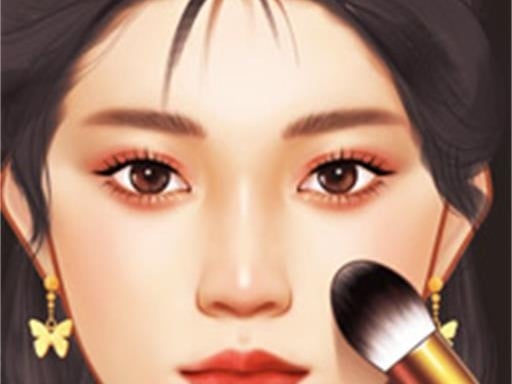
Makeup Master Game is built around transformation, but the transformation does not begin with lipstick or eye shadow.
Each client arrives with a face that needs preparation before the final makeup can work. Depending on the current character, you may see tired-looking skin, under-eye shadows, blemishes, facial marks or brows that need shaping. The purpose of the first stage is to deal with those visible concerns in a clear order rather than covering everything immediately with color.
Public descriptions of Makeup Master repeatedly mention washing the face, cleaning blemishes, applying a spa mask, preparing the skin and only then moving into foundation, eyeliner, eye shadow, lipstick, hairstyles and accessories. 1
That order is what gives the game more structure than a basic makeup selector.
In a simple beauty game, the player may begin with a finished face and choose whichever cosmetic color looks attractive. Makeup Master asks the player to work through a full appointment.
The client has arrived for a reason.
She may be getting ready to go out, meet friends, visit the mall, spend time at a playground or attend another everyday event. YIV’s browser description presents four clients with different starting appearances and asks the player to make each one look refreshed before going out. 2
The makeover therefore has two layers:
- Improve the visible condition of the skin and brows.
- Create a finished look suited to the client.
A strong result depends on both.
Beautiful eye shadow cannot fully compensate for an unfinished base. An even foundation does not create personality by itself. A dramatic hairstyle may feel disconnected when the makeup underneath has no clear direction.
The game works best when the player thinks like someone managing an entire beauty appointment, not someone selecting random products from a cosmetics drawer.
What You Actually Do in Makeup Master Game
The basic gameplay follows a step-by-step salon routine.
Exact menus can vary between browser versions, but the public descriptions consistently identify the following types of activities:
- Washing and cleansing the face;
- Removing or treating visible blemishes;
- Applying a facial or spa mask;
- Tidying the brows;
- Preparing the complexion with foundation;
- Applying eyeliner and eye shadow;
- Choosing eyelashes or mascara;
- Selecting lipstick;
- Changing the hairstyle;
- Adding necklaces, earrings and other accessories;
- Completing the final makeover. 1
Some versions present several clients rather than one model.
That matters because the same makeup should not automatically be copied onto every face. Different skin tones, facial features, starting conditions and planned activities can support different color choices and levels of intensity.
A client preparing for a casual outing may look better with a softer palette and simpler accessories. A more formal or fashion-focused client may support stronger eyeliner, a more deliberate lip color and a polished hairstyle.
The process can be divided into five broad phases:
Phase One: Assess the Face
Look at the skin, brows, under-eye area and visible concerns before selecting a tool.
Phase Two: Clean and Prepare
Use the cleansing and skincare steps in the order requested by the game.
Phase Three: Build the Makeup
Apply complexion products first, followed by eyes, lips and other color details.
Phase Four: Style the Hair
Choose a hairstyle that supports the shape and mood of the makeup.
Phase Five: Finish the Look
Use clothing, jewelry and accessories to complete the client rather than overpower the face.
The game provides visual prompts for many of these actions. Follow the active tool or highlighted area instead of trying to use every product at once.
Read the Face before Choosing a Tool
The first useful habit in Makeup Master is observation.
When the client appears, do not immediately click the most colorful cosmetic category. Spend a moment looking at what the game is showing you.
Possible starting concerns may include:
- Uneven or tired-looking skin;
- Darker areas beneath the eyes;
- Small blemishes;
- Visible facial marks;
- Brows that require grooming;
- A complexion that has not yet been prepared for makeup.
These details usually tell you which tool the game expects next.
If a cleansing product is visible, the face probably needs to be washed before anything else. If a blemish tool appears, complete that step before applying the mask. If the eyebrows are emphasized, brow preparation may be part of the current stage.
The game is guided, but observation still makes the process smoother.
Clicking products randomly can cause confusion because some tools only work on the correct area or after an earlier step has been completed.
A useful rhythm is:
- Identify the active problem.
- Select the matching tool.
- Apply it slowly across the intended area.
- Wait for the visual response.
- Confirm that the step is complete.
- Move to the next highlighted tool.
This feels closer to following a beauty routine than to decorating a static face.
Clean the Skin before Covering It
The cleansing stage is not filler placed before the interesting makeup.
It creates the visible before-and-after effect that defines the makeover.
Washing the face removes the first layer of tiredness or surface marks. Blemish treatment changes smaller details. A mask or spa step creates another visual transition before the foundation is applied.
The App Store and Google Play descriptions both emphasize washing, blemish cleanup and a spa mask before the color makeup begins. 1
Follow the tools in sequence.
A typical routine may look like this:
- Apply cleanser or facial wash.
- Move the product across the face.
- Rinse or remove it.
- Treat individual blemishes or marks.
- Prepare the brows if requested.
- Apply the facial mask.
- Wait for the stage to complete.
- Remove the mask.
- Begin complexion makeup.
Do not rush the dragging motions.
Some salon games require the tool to pass over the full target area rather than register one click. If the next button does not appear, check whether part of the cleanser, mask or treatment is still visible.
The same principle applies to individual blemishes. One may remain near the side of the face or forehead even after the most obvious marks have been treated.
Completing the preparation carefully makes the later makeover feel earned rather than instantly applied.
Treat the Skincare as Preparation, Not a Medical Lesson
Makeup Master uses familiar beauty-salon ideas, but it should still be understood as a casual game.
The tools are simplified, the results are immediate and the game does not reproduce the complexity of real skincare. A product is selected, applied and followed by a clear visual improvement.
The game is useful as a sequence-based makeover experience, not as medical or dermatological advice.
This distinction matters when writing about blemishes or under-eye shadows.
The client is not “bad” or “ugly” before the makeover. The starting face simply creates a stronger transformation and gives the player a set of visual tasks.
A better way to understand the gameplay is:
- The client arrives looking tired or unprepared.
- The player completes a care routine.
- Makeup adds color and definition.
- Hair and accessories establish the final style.
The game is about the process and comparison between stages.
Build an Even Base before Adding Strong Color
Foundation creates the transition from skincare to makeup.
Its purpose is not to become the most noticeable part of the face. It provides a consistent surface so that the eye and lip colors appear deliberate.
Public descriptions identify foundation as one of the main tools used after facial preparation. 1
Choose or apply the base carefully.
If the game provides different shades, select one that works naturally with the client’s visible skin tone rather than simply choosing the lightest or darkest option.
The strongest base usually feels:
- Even;
- Smooth;
- Connected to the neck;
- Quiet enough for the later makeup;
- Consistent with the client’s original complexion.
Foundation should not erase the identity of the face.
Different clients can keep different skin tones and still receive equally polished makeovers. The goal is not to force every model toward one identical color.
If the game includes blush, contour or similar complexion details, use them after the foundation has been established.
Blush can add warmth and energy. Too much can compete with the lips and eye shadow. A stronger cheek color may work with a simple eye look, while detailed eyes may need a quieter complexion.
Think of the base as the visual support for everything above it.
Shape the Brows before Designing the Eyes
Brows affect the expression of the face before eye shadow is even applied.
A public description of the game mentions clients arriving with brows that need attention, while Miniplay includes eyebrows among the elements used to construct the final look. 1
The brow shape can make the character look:
- Softer;
- More serious;
- More polished;
- More dramatic;
- More youthful;
- More fashion-focused.
Avoid treating the brows as a separate decoration.
They should frame the eyes and support the hairstyle.
A strong or angular brow can work with clean eyeliner and a structured hairstyle. A softer brow may support lighter shadow and a more relaxed look.
If the brows are already visually heavy, extremely dark eyeliner can make the upper half of the face feel crowded.
Complete the brows first, then judge how much additional eye definition is needed.
Use Eye Makeup to Establish the Main Mood
The eye area usually carries the most detail in a Makeup Master makeover.
The public versions mention eyeliner, eye shadow, lashes or mascara, eyebrows and eye color. 1
Begin by deciding what kind of result suits the client.
Soft everyday look
Use related shades, moderate contrast and lashes that do not hide the eye shape.
Polished evening look
Add stronger outer-corner shadow, clearer eyeliner and more noticeable lashes.
Bright fashion look
Use a more colorful eye shadow while keeping the lipstick or accessories controlled.
Classic glamorous look
Use defined liner, balanced shadow and a lip color that supports rather than competes with the eyes.
The eye color can also change the final effect.
A selected iris color may echo the clothing, contrast with the shadow or become the most noticeable feature. Do not assume that the brightest eye color is always the best.
Build the area in layers:
- Select the brow shape.
- Choose the eye color if available.
- Apply the main eye-shadow tone.
- Add a darker or supporting color.
- Choose eyeliner.
- Add lashes or mascara.
- Review both eyes together.
The final review is important.
Each product can look attractive alone, but the combination may become too heavy. If the liner, shadow, lashes and brow are all extremely dark, the eye itself can disappear.
One element should lead.
Choose Lipstick after the Eyes Are Finished
Lipstick should complete the color balance of the face.
If the eye makeup is already strong, a softer or more controlled lip often works better. If the eyes are simple, the lip can become the main color feature.
Public descriptions consistently list lipstick as one of the final major cosmetic choices. 1
Compare the lipstick with:
- The eye-shadow palette;
- The client’s skin tone;
- The hairstyle;
- The outfit;
- The planned occasion.
A bright red lip can create a polished, dramatic result. Pink can feel softer or more playful. Nude or muted tones allow the eyes and accessories to receive more attention. Deeper colors can support evening styling.
Avoid matching the lipstick exactly to every other color.
A red dress does not always need the same red lipstick. Slight differences can create more depth, while an exact match may make the styling feel too literal.
If the mouth becomes the first thing you see and that was not the intention, try a quieter shade.
Match the Hairstyle to the Face You Created
The hairstyle is not an unrelated bonus added after the makeup.
It changes the outline of the head, the amount of visible forehead, the space around the earrings and the balance between the upper and lower face.
Public descriptions mention choosing hairstyles after completing the cosmetics, and YIV also connects the hairstyle with outfits and accessories. 2
Look at the finished makeup before selecting hair.
A detailed eye look may benefit from a style that keeps the face open. A simple makeup design can support more volume, texture or movement around the head.
Consider:
- Hair length;
- Hair color;
- Volume;
- Parting;
- Whether the ears remain visible;
- Whether the style covers the brows or eye makeup;
- Whether it matches the clothing.
The hairstyle can also change the perceived personality of the client.
A clean updo may feel formal and controlled. Long loose hair can feel softer. A shorter or more structured style can make the face appear sharper and more modern.
Do not choose only by how the hair looks in isolation.
Choose by what it does to the completed face.
Use Jewelry to Finish the Look, Not Rescue It
Necklaces and earrings appear in the public descriptions as finishing accessories. 1
They should not be used to distract from makeup that feels incomplete.
If the eyes, lips and hairstyle already create a clear identity, jewelry should provide a final connection to the outfit or occasion.
Earrings are especially dependent on the hairstyle.
Large earrings may disappear beneath long hair. Smaller earrings may look too quiet when the hairstyle leaves the ears completely exposed. A necklace needs enough open space around the neckline to be visible.
Ask:
- Does the hairstyle leave room for earrings?
- Does the outfit already contain strong decoration?
- Is the necklace repeating a useful color?
- Does the jewelry fit the client’s destination?
- Is the accessory adding polish or only adding another object?
A client going to a casual daytime activity may not need the same level of jewelry as someone preparing for an evening look.
The best accessory is the one that makes the complete styling feel intentional.
Four Clients Should Not Receive the Same Face
YIV’s description specifically presents four customers with different starting appearances and plans. 2
That gives the game an opportunity for variety.
Instead of repeating the same favorite eye shadow, lipstick and hairstyle on every client, use each face as a separate styling problem.
One client might support:
- Soft shadow;
- Natural lips;
- Simple hair;
- Minimal jewelry.
Another might look better with:
- Strong eyeliner;
- Darker lipstick;
- A structured hairstyle;
- More formal accessories.
A third can use a brighter or more playful palette. A fourth can become the most dramatic makeover.
Try giving every client a different dominant feature:
- Client one: the eyes.
- Client two: the lips.
- Client three: the hairstyle.
- Client four: the complete color theme.
This prevents the game from becoming repetitive and makes it easier to compare how different decisions affect different faces.
Create Looks for the Client’s Destination
The YIV description mentions customers preparing to go to places such as the mall or playground. 2
The destination can guide the intensity of the makeover.
Mall look
A polished but wearable style works well.
Use balanced foundation, defined eyes, a clear lip color and accessories that feel fashionable without becoming overly formal.
Playground or casual outdoor look
Keep the face lighter and the hairstyle practical.
The look can still be colorful, but it should feel more relaxed than an evening makeover.
Evening or party-inspired look
Use more contrast around the eyes, a stronger lip or more deliberate jewelry.
Fashion-focused look
Choose one feature to make memorable.
This could be the eye color, a strong shadow, a dramatic hairstyle or a bold accessory.
The game may not enforce strict styling rules for the destination. The setting simply gives the player a reason to make different choices.
Why Preparation Makes the Final Makeover More Satisfying
The makeover would be much faster if the game began with a clean face and opened directly to the eye-shadow menu.
It would also lose most of its transformation.
Cleansing, blemish care, the mask and brow preparation establish a visible starting point. Foundation creates the middle stage. Makeup, hair and accessories complete the result.
The player can understand how the character changed because the process was shown rather than skipped.
This is the main difference between Makeup Master and a free-form cosmetics palette.
The game provides:
- A starting condition;
- A sequence of care tasks;
- A cosmetic design stage;
- A final styling stage.
That structure is especially useful for players who like guided progress and clear visual rewards.
How Makeup Master Differs from Halloween Makeup Me
Both games are built around facial styling, but they serve different intentions.
Halloween Makeup Me asks the player to create a character such as a witch, vampire or monster. Unusual skin tones, tattoos, rhinestones and theatrical color are central to the design.
Makeup Master is closer to a salon appointment.
The player works with everyday client concerns, prepares the skin and creates a polished beauty transformation. The goal is not to make the face supernatural. It is to make the complete look feel refreshed and coordinated.
Halloween Makeup Me asks:
What kind of Halloween character should this become?
Makeup Master asks:
What does this client need, and what finished look suits her?
Players who prefer dramatic themes and face art may enjoy Halloween Makeup Me more.
Players who prefer cleansing, skincare, conventional cosmetics and before-and-after makeovers will probably find Makeup Master more satisfying.
How It Differs from Spa Day Makeup Artist
Makeup Master and Spa Day Makeup Artist overlap in skincare and cosmetics.
The main difference is emphasis.
Spa-themed games often spend more time on relaxation, facial care and treatment stages. The atmosphere is usually slower and centered on preparing the skin.
Makeup Master uses skincare as the beginning of a larger makeover.
The player moves from facial preparation into foundation, eye makeup, lipstick, hair, clothing and accessories. The final visual transformation is the main reward.
A player who enjoys masks, cleansing and care routines may prefer Spa Day Makeup Artist.
A player who wants to see the full progression from tired client to completed fashion look may prefer Makeup Master.
Build the Look in a Reliable Order
A consistent order makes every customer easier to style.
Step 1: Observe
Identify visible concerns and the intended destination.
Step 2: Cleanse
Complete the wash, blemish and mask stages.
Step 3: Prepare the brows
Shape the frame around the eyes.
Step 4: Apply the complexion base
Use foundation and any available cheek color.
Step 5: Design the eyes
Choose eye color, shadow, liner and lashes.
Step 6: Select lipstick
Balance the lip against the eye design.
Step 7: Choose the hairstyle
Keep the face visible and support the mood.
Step 8: Add clothing and accessories
Complete the client without covering the work already done.
Step 9: Edit
Remove or replace one detail and compare the result.
The final editing step is where many makeovers improve.
Eight Makeover Challenges to Try
1. Natural Transformation
Use subtle colors and focus on skin preparation, brows and balanced features.
The final client should look refreshed without one extremely dramatic element.
2. Eye-Focused Look
Keep the lips and jewelry simple.
Use the eye color, shadow, liner and lashes as the main design.
3. Lip-Focused Look
Choose a stronger lipstick and keep the eye makeup controlled.
Select a hairstyle that does not compete with the lower half of the face.
4. One-Color Family
Use related shades across the eyes, lips, hair detail or outfit.
Avoid repeating the exact same color everywhere.
5. Casual Day Out
Create a look that feels suitable for the mall, park or another relaxed destination.
Use lighter accessories and a comfortable hairstyle.
6. Evening Makeover
Use greater contrast, a more polished hairstyle and deliberate jewelry.
Keep one part simpler so the face still has a focal point.
7. Four Different Clients
Give every customer a separate style rather than repeating your favorite makeup.
8. Before-and-After Comparison
Pay attention to the starting face before using any tools.
At the end, identify which stage created the largest visible change.
Common Makeover Mistakes
Starting with color before preparation
The skincare and base stages create the surface needed for the later products.
Making every feature dramatic
Strong eyes, bright lips, large jewelry and detailed hair can compete.
Copying one look onto every customer
Different faces and destinations deserve different choices.
Ignoring the brows
The brows affect the expression and balance of the eye makeup.
Choosing hair without reviewing the face
A hairstyle can cover the brows, eyes or earrings.
Using accessories to fill every available space
The finished client does not need every necklace and earring option.
Changing several products at once
Replace one part at a time so you can understand which choice improved the result.
Forgetting the destination
A casual outing and an evening appearance do not need the same intensity.
Controls and Browser Experience
Public browser listings describe the game as controlled through clicking or tapping. Lagged summarizes the interaction as clicking or tapping to help the salon clients, while other versions use simple mouse or touch selection. 3
On desktop, the expected controls are:
- Click tools to select them;
- Drag cleansers, masks or treatment tools when requested;
- Click cosmetic colors and styles;
- Move between makeover categories;
- Select hairstyles, clothing and accessories;
- Continue after completing each guided step.
On supported touch devices, the same actions may use tapping and dragging.
Small tools can be easier to control on a larger screen.
Progress saving has not been confirmed for the current Girl-Games.io version. Do not promise that a customer, makeover or unlocked stage will return after the browser is refreshed.
Our Test Notes
Last checked: July 2026
Main controls: Mouse / tap / drag
Play style: Multi-client skincare and makeover simulation
Progress saving: Not confirmed
This section should be finalized using the current Girl-Games.io embedded version.
Confirm:
- Whether an external Play screen appears;
- Whether the game remains inside the page;
- Whether a new browser tab opens;
- Whether all available clients can be selected;
- Whether facial cleansing responds;
- Whether blemish treatment can be completed;
- Whether the spa mask applies and removes correctly;
- Whether the brow tools respond;
- Whether foundation, eyeliner and eye shadow work;
- Whether lipstick changes correctly;
- Whether hairstyles open;
- Whether clothing and jewelry categories are present;
- Whether the final look can be completed;
- Whether full-screen works;
- Whether refreshing resets the session.
Do not copy another platform’s rating, play count or release date into the test notes.
Who Will Probably Enjoy Makeup Master Game
The game is likely to suit players who enjoy:
- Complete before-and-after makeovers;
- Facial cleansing;
- Skincare games;
- Beauty salon routines;
- Makeup tools;
- Eye-shadow and lipstick choices;
- Eyebrow styling;
- Hairstyle selection;
- Jewelry and fashion accessories;
- Working with several clients;
- Guided step-by-step gameplay;
- Comparing different finished looks;
- Calm games without fast movement;
- Visible transformation.
It is especially suitable for players who prefer a defined process.
The game regularly tells the player what kind of tool is needed next, while still leaving room for color and styling choices during the final makeover.
It may be less suitable for players who want:
- Free room decoration;
- Action or running mechanics;
- Multiplayer competition;
- Difficult puzzles;
- Completely unrestricted face painting;
- Horror or fantasy themes;
- Long story campaigns;
- Professional skincare realism;
- Confirmed cloud saving;
- A game focused only on clothing.
Players who want theatrical makeup may prefer Halloween Makeup Me. Players who want more spa treatment may prefer Spa Day Makeup Artist. Players who mainly want fashion and event styling may prefer Fashion Holic.
Frequently Asked Questions
What is Makeup Master Game?
Makeup Master is a beauty-salon game where the player prepares different clients through facial cleansing, skincare, cosmetics, hairstyles and accessories. Public versions describe several customers and a complete progression from face preparation to the final look. 1
How many clients are in the game?
YIV’s browser description refers to four customers. The exact number should still be confirmed in the current Girl-Games.io embedded version before being presented as guaranteed. 2
What skincare steps are included?
Public descriptions mention washing the face, removing or treating blemishes, applying a spa mask and preparing the complexion before makeup. 1
What makeup can I apply?
Descriptions mention foundation, eyeliner, eye shadow, mascara or eyelashes, lipstick, brows and eye color. The exact available choices can vary between versions. 1
Can I change the hairstyle?
Yes. Public versions describe selecting hairstyles after the facial and makeup stages. Some also include clothing, necklaces and earrings. 2
Is the game only about makeup?
No. The process also includes facial care, brow preparation, hair and accessories. The browser version is presented as a complete customer makeover rather than only a color palette. 1
Is Makeup Master Game free?
The public browser listings present it as a free online game. The current Girl-Games.io page can be opened without purchasing the game, although the external provider may display advertising.
Does the game save progress?
Progress saving has not been confirmed for the current embedded version. Unless a visible account, save or continue option appears, assume that the current makeover may reset after refreshing or closing the page.
Can I play on a phone or tablet?
Several public versions describe click or tap controls and support for desktop or touch devices. Actual performance still depends on the current provider, browser, screen size and embedded build. 3
Why is the makeup tool not working?
Check whether the previous step has been completed. Some products only become active after the face is washed, blemishes are treated, the mask is removed or the current guided action is finished.
More Games You May Like
Want a slower routine with greater attention to spa preparation and facial care? Try Spa Day Makeup Artist: Makeover Salon Girl Games.
Prefer dramatic face art, unusual skin tones and supernatural characters? Open Halloween Makeup Me.
For outfit choices built around events, red carpets and photoshoots, try Fashion Holic.
You can also browse more titles in Makeup Games or visit New Girl Games.