Style an Idol Team
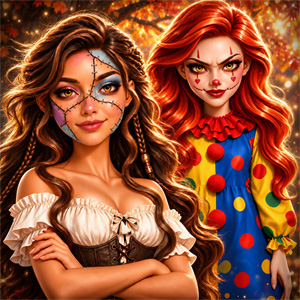
K-Pop Demon Hunter Fashion is a K-pop dress up game built around styling a group of heroines. The visual theme combines stage fashion with a demon hunter setting, so the best outfit can be bright and performance-ready while still feeling suited to the fantasy premise.
The game’s central challenge is not a timed runway or a salon treatment. It is group design. Three heroines share the same fictional world, but each can carry a different silhouette, color balance and role in the team. A successful result can make them look coordinated without making every member identical.
How to Play
Use the mouse to select clothing and appearance items for each character. Work through outfits, hairstyles, glasses, jewellery, hats and other accessories. Compare the three characters as a group rather than styling each one in isolation. A provider start screen or loading layer may appear before the actual dress-up interface.
The source page identifies the exact iframe as the browser version and lists the three-character setup, outfits, hairstyles, glasses, earrings, necklaces, hats, microphones and swords or weapons. The page also documents a photo button, a dice button for a random outfit and a trash button for starting over.
Give Each Member a Role
Start by deciding what each heroine contributes to the group:
- Lead performer: brighter stage clothing or a strong hairstyle
- Hunter specialist: darker details, boots, a sword or a more practical silhouette
- Visual balance: a calmer outfit that connects the other two palettes
These roles are styling suggestions, not game rules. They prevent the common result where all three characters receive the same strongest item. The team looks more deliberate when one member leads visually and the others support the composition.
Coordinate Color without Matching Everything
Choose one shared color—pink, red, purple, silver or black—and repeat it in small places across the team. The characters do not need identical outfits. A shared accessory color can be enough to make different silhouettes feel related.
For a concert direction, brighter clothing and microphones can establish the stage identity. For the demon-hunter direction, darker accessories and weapons can carry the fantasy side. A hybrid look works when the two themes are separated by role: one member can lean pop, another can lean gothic, and the third can bridge them with a mixed palette.
Avoid giving every member bright hair, large hats and weapons at the same time. Those items compete for attention. Let one or two elements lead, then use glasses, jewelry or a necklace as smaller connecting details.
Outfit before Small Accessories
The outfit establishes the character’s silhouette. Choose it before glasses, jewelry and hats so that the smaller items support the clothing rather than forcing a new direction.
Next, select the hairstyle. Hair changes the face framing and can either reveal or hide the outfit’s neckline. A dramatic hat may work with a simpler hairstyle; a detailed hairstyle may need a smaller hat.
Finish with earrings, necklaces and other small details. These items are useful for repeating the team color, but they should not be used to rescue an outfit that already feels confused. If the result is crowded, remove one accessory first.
Stage Mode and Hunter Mode
The title supports two connected styling readings:
Stage mode
Use brighter outfits, coordinated hair, microphones and polished accessories. The three members should look like a group preparing for a performance, even if each has a different personality.
Hunter mode
Use darker or more dramatic clothing, practical-looking accessories and swords or other fantasy weapons. The design can still be glamorous, but the silhouette should suggest action rather than only a concert.
Fusion mode
Combine one performance element with one fantasy element for each member. For example, keep the outfit stage-ready while using a weapon or darker accessory as the character’s signature detail.
These are player-created themes based on the documented item categories. The game does not require a separate mode selection.
Use the Dice and Trash Buttons Deliberately
The dice button is useful when you want a starting idea rather than a final answer. Let it create a random outfit, then keep one good element and rebuild the rest around it. This is more productive than accepting every random combination unchanged.
Use the trash button when the current character has accumulated too many competing choices. A clean reset gives you a better comparison than repeatedly replacing one small item inside a confused look.
The photo button can capture the finished styling on the source page. Saving the look is a device-level feature described by the provider page; persistent game progress is a separate question and has not been confirmed for the current embedded build.
Team Styling Checklist
Before finishing, inspect the group in this order:
- Does one member lead visually?
- Does each character have a recognisable silhouette?
- Is at least one color repeated across the team?
- Are the microphones, weapons and hats supporting different roles rather than covering every character?
- Do the hairstyles and accessories leave the faces readable?
- Does the group look like one theme with three interpretations?
If the answer to several questions is no, change one category at a time. Replacing every outfit at once makes it difficult to understand which decision improved the result.
Replay Challenges
The free-form wardrobe supports several useful replays:
- Style all three members with one shared color but different silhouettes.
- Create a pure concert group with microphones as the visual link.
- Create a hunter group where weapons lead and stage items become accents.
- Use the dice button once, keep the best random item and design around it.
- Give each heroine a different intensity: polished, dramatic and playful.
These are creative challenges, not confirmed scoring or unlock systems. The current page should not promise a leaderboard, rewards or saved progress without checking the embed itself.
Idol Fashion Ideas
The game supports coordinated looks as well as contrasting member styles. Pick one shared color for the group, then give each character a different silhouette. Stage pieces such as microphones can create a performance look, while darker accessories can reinforce the demon hunter fashion theme.
Makeover Tips
Start with the outfit and hairstyle, then add jewellery and smaller details. If a look feels crowded, remove one accessory instead of changing everything. Use the random or reset controls only when you want a fresh comparison.
For more idol and fashion looks, browse Dress Up Games.
How It Differs from Other Fashion Games
Fashion Holic focuses on styling for different occasions, while K-Pop Demon Hunter Fashion focuses on a three-member group and the contrast between idol performance and fantasy combat. Fashion Battle introduces competitive runway decisions; this game is more relaxed and lets you compare your own combinations. For a character-creator approach rather than a fixed idol team, try Anime Avatar Design.
Our Test Notes
Last checked: August 2026
Play style: Three-character themed dress up
Controls: Mouse on desktop; touch listed by the provider
Photo button: Described on the source page
Progress saving: Not confirmed for the current embedded build
The exact Play-Games iframe in this file is the same embed identified on the provider page. The article uses the provider’s confirmed item categories and avoids importing unrelated Netflix character or story details into the browser-game guide.
FAQ
Is this a makeover game?
It is a themed dress-up and styling experience with makeover-like visual choices.
What controls are used?
The tested control is the mouse.
Can the final look be saved?
The source page describes a photo option, but saving behavior should be confirmed during local testing.
More Games You May Like
Fashion Holic is useful for occasion-based styling, while Fashion Battle adds timed runway decisions. For anime character creation, try Anime Dress Up: Doll Dress Up or Kawaii Chibi Creator.
Sources and Version Notes
The official Play-Games page supplies the iframe identity, the three-character setup, the item categories, the dice/randomize control, the trash/reset control and the photo button. It also lists mouse and touchscreen play. PlayGameCat independently confirms the K-pop and gothic demon-hunter fashion pairing. A BabyGames listing supports the click-and-drag dress-up interaction, while its character names and other site-specific claims are not needed here.
No source used for this page establishes persistent progress, a score system, levels or unlocks for the current Girl-Games.io iframe.